
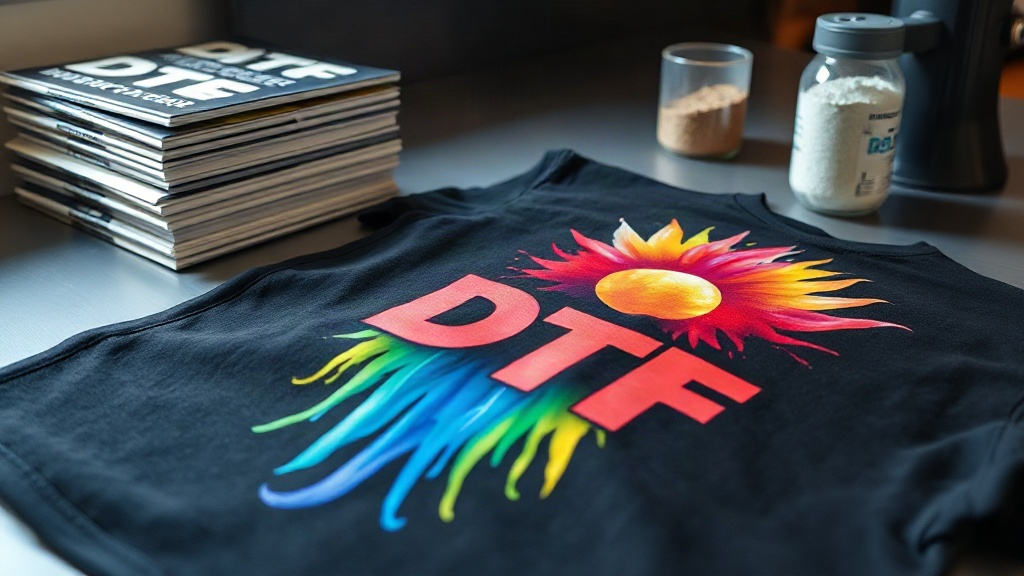
If you have ever tried to print a detailed, multicolored design onto a dark cotton t-shirt at home, you know the struggle: weeding tiny vinyl pieces, cracked screen prints, or colors that fade after a few washes. DTF transfers solve those headaches. This technology has quickly become a favorite among crafters and professional decorators alike because it delivers photographic-quality prints on almost any fabric, with minimal equipment and a whole lot less fuss. In this guide, I will walk you through exactly what DTF transfers are, how they work, and how you can use them to create stunning custom apparel that lasts.
What Are DTF Transfers?
DTF stands for Direct to Film. Unlike DTG (Direct to Garment) printing, which prints directly onto the fabric, DTF printing involves printing your design onto a special PET film, coating it with a thermoplastic powder, and then heat-pressing it onto the garment. The result is a transfer that bonds permanently to the fabric. The process was first developed for industrial textile printing, but in recent years it has become accessible to small businesses and hobbyists thanks to affordable desktop DTF printers and supplies.
What sets DTF transfers apart is their versatility. They adhere to cotton, polyester, blends, nylon, leather, and even treated wood or metal. That means you can decorate almost anything you can heat-press. Plus, because the design is printed on film first, you can produce intricate details, gradients, and photorealistic images that would be impossible with vinyl or screen printing.
How DTF Transfers Work: Step by Step
Understanding the process helps you troubleshoot and get better results. Here is the typical workflow for creating and applying a DTF transfer.
1. Design Preparation
Start with a high-resolution image. DTF printers use CMYK plus white ink, so your design should be in RGB or CMYK color mode. If your design has transparent areas, they will remain unprinted, allowing the garment color to show through. For best results, avoid thin, hairline strokes; they may not hold up as well after pressing.
2. Printing
The design is printed onto a sheet of PET film. First, the printer lays down a layer of white ink (the opacity layer), then the color layers on top. Some printers print white last, but most print white first. The film is then dusted with a hot-melt adhesive powder (often TPU) while the ink is still wet. Excess powder is shaken off, and the film is cured in an oven or with a heat gun until the powder melts and forms a smooth, dry layer.
3. Transfer Application
Once cured, the transfer is ready to apply. You can store it for later use. To apply, preheat your heat press to the recommended temperature (usually 300-325°F / 150-160°C) and set the pressure to medium. Place the transfer on the garment with the powder side down (the printed side up), cover with a Teflon sheet or parchment paper, and press for 10-15 seconds. Let it cool completely, then peel away the film. The design remains on the fabric, soft and stretchy.
Why Choose DTF Transfers Over Other Methods?
There are several compelling reasons to make DTF your go-to decoration method.
- No weeding or masking: Unlike vinyl, you don't have to cut and weed tiny pieces. Just print, powder, and press.
- Full-color and photographic detail: DTF can reproduce complex images with millions of colors, gradients, and fine lines.
- Works on almost any fabric: From 100% cotton to polyester, blends, and even non-fabric items, DTF adheres reliably.
- Durability: When applied correctly, DTF transfers withstand dozens of washes without cracking, peeling, or fading. They stretch with the fabric, so they're great for athletic wear.
- Low startup cost: You don't need screens, plates, or a full DTG machine. A desktop DTF printer and a heat press are enough to get started.
- No pre-treatment: Unlike DTG, DTF doesn't require pre-treating the garment, saving time and avoiding stains.
Common Challenges and How to Overcome Them
Even though DTF is forgiving, a few issues can arise. Here's how to tackle them like a pro.
Adhesion Problems
If the transfer peels off after washing, it's usually due to insufficient pressure, incorrect temperature, or under-curing the powder. Make sure your heat press is calibrated and apply firm, even pressure. Also, ensure the powder is fully melted before pressing; if it looks gritty, cure it longer.
Color Fading
Fading can happen if the transfer is over-pressed (too hot or too long) or if you use low-quality ink and film. Stick to reputable suppliers and follow the recommended settings. Washing garments inside out in cold water and avoiding bleach will also extend the life of your prints.
Film Sticking to the Garment
If the film is difficult to peel, you might be peeling too soon. Wait until the transfer is completely cool (cold peel) for best results. Some films are designed for hot peel, so check your film's instructions. Also, using a Teflon sheet or parchment paper prevents the film from sticking to your press.
DTF Transfers vs. Other Printing Methods
How does DTF stack up against the competition? Here's a quick comparison.
- DTF vs. Vinyl: Vinyl is great for simple, single-color designs, but DTF wins for complex, multi-color images and fine details. Vinyl also requires weeding, which is time-consuming.
- DTF vs. DTG: DTG prints directly onto fabric and works best on 100% cotton. DTF works on more fabrics and produces more durable prints on polyester. DTG requires pre-treatment, while DTF does not.
- DTF vs. Screen Printing: Screen printing is cost-effective for large orders of simple designs, but it's not practical for small batches or photorealistic images. DTF has no minimum order and excels at detailed, full-color artwork.
- DTF vs. Sublimation: Sublimation only works on polyester or specially coated items, and the colors become part of the fabric. DTF sits on top of the fabric and works on cotton too, with a slightly more textured feel.
Tips for Getting the Best Results with DTF Transfers
After using DTF for hundreds of projects, I've picked up a few tricks that make a big difference.
- Invest in a quality heat press: A clamshell or swing-away press with accurate temperature and pressure control is essential. Irons are not reliable for DTF.
- Use a Teflon sheet or parchment paper: This protects your press and prevents the transfer from sticking.
- Pre-press the garment: A quick 5-second press removes moisture and wrinkles, ensuring better adhesion.
- Store transfers properly: Keep unused transfers in a cool, dry place away from direct sunlight. They can last for months.
- Test your settings: Every heat press and film brand behaves slightly differently. Do a test press on a scrap fabric before tackling a large order.
- Wash inside out: To maximize durability, turn garments inside out and wash in cold water. Avoid fabric softener and bleach.
Frequently Asked Questions About DTF Transfers
How long do DTF transfers last?
When applied correctly, DTF transfers can last 50+ washes without significant fading or cracking. Proper washing and avoiding high heat in the dryer will extend their life.
Can I use DTF transfers on dark colors?
Yes, DTF transfers are ideal for dark garments because the white ink layer provides a bright, opaque base. Your design will pop on black, navy, or any dark fabric.
Do I need a special printer for DTF?
You need a DTF printer that uses DTF ink and can print white ink. Converted Epson printers are popular for small-scale production. Alternatively, you can outsource printing to a DTF transfer supplier and just apply the transfers yourself.
What fabrics work best with DTF transfers?
DTF works on cotton, polyester, blends, nylon, leather, and more. It's especially useful for polyester and blends where DTG and sublimation have limitations.
How do I avoid the plastic feel of DTF transfers?
The feel depends on the amount of ink and powder used. Using a thinner powder and optimizing your print settings can reduce the hand feel. Also, stretching the transfer slightly when applying can make it feel softer.
Final Thoughts
DTF transfers have democratized custom apparel printing. Whether you're a small business owner, a craft hobbyist, or someone who wants to make personalized gifts, DTF offers a fast, affordable, and high-quality solution. With a modest setup and a bit of practice, you can produce vibrant, wash-resistant designs on virtually any fabric. Give DTF a try on your next project, and you might never go back to vinyl or screen printing again.