
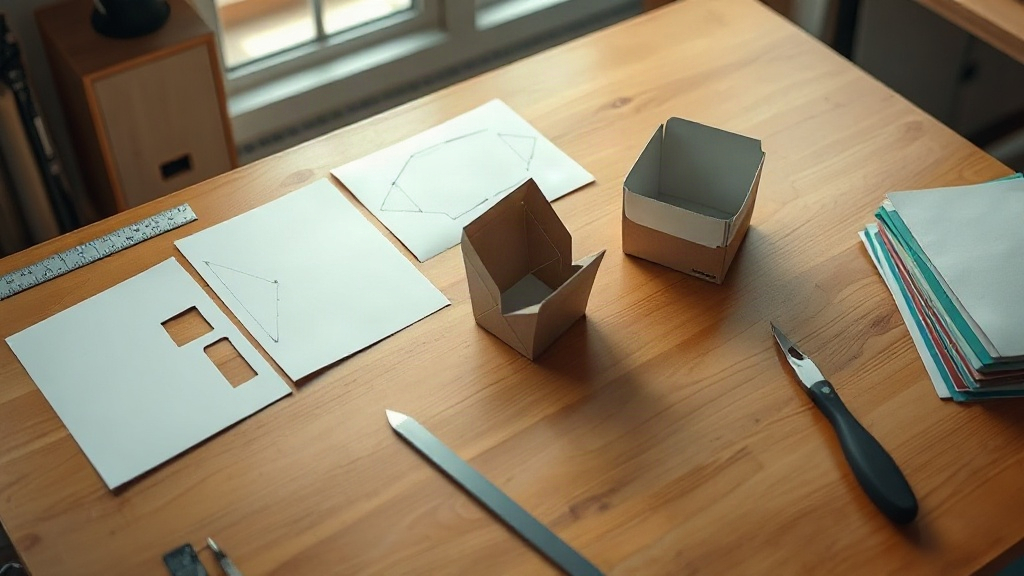
Anyone who has waited on a custom print job knows the frustration: you approve a proof, wait for production, and then discover the fold lines land two millimeters off, or the die-cut corners don't quite align. Smart blanks exist to eliminate that guesswork. They are pre-structured, print-ready templates that combine accurate cut and fold geometry with customizable surface areas, letting you test, adjust, and produce physical pieces without rebuilding the file from scratch every time.
The concept sounds simple, but the impact on workflow, material cost, and creative iteration is substantial. Whether you run a small design studio or manage packaging for a growing brand, understanding how smart blanks work can save you hours and a surprising amount of money.
What Exactly Are Smart Blanks?
A smart blank is a digital template that defines the structural skeleton of a printed object: the outer dimensions, the fold lines, the bleed area, the glue tabs, and the safe zones for text and imagery. What makes it "smart" is that these structural elements stay locked while the visual layer remains fully editable. You can swap artwork, change colors, or test a completely different layout without ever worrying about whether the piece will still fold correctly.
Think of it as the difference between building a chair from raw lumber versus starting with a pre-cut kit. The kit gives you the joints and measurements already solved, so your energy goes into the finish, the upholstery, and the details that people actually notice.
Smart blanks are common in packaging design, but they also appear in stationery, point-of-sale displays, event collateral, and even specialty items like seed packets or subscription inserts. Anywhere a flat sheet needs to become a three-dimensional object with precision, a blank provides the foundation.
Why They Matter More Than Most People Realize
At first glance, a template is just a template. But the cumulative effect of using smart blanks across a project changes how teams work.
Faster iteration cycles
When the structure is already solved, a designer can produce three or four visual directions in the time it used to take to build one dieline from scratch. That speed matters when a client wants to see options before committing, or when a product launch timeline is tight.
Fewer production errors
Most print defects trace back to file setup problems, not press failures. A misplaced fold line or a missing bleed can ruin an entire run. Smart blanks eliminate those variables because the structural layer is standardized and tested against real production equipment.
Lower material waste
Prototyping with smart blanks means you can run a single physical sample, check the fit and feel, and adjust before committing to a full sheet layout. On large runs, that early correction often saves hundreds of sheets of cardstock or corrugated board.
Consistency across a product line
If you produce multiple SKUs that share a packaging format, using the same smart blank family keeps everything aligned. Shelves look cohesive, and customers recognize your products faster because the proportions and structure stay consistent.
Where Smart Blanks Fit in a Real Workflow
Understanding the concept is one thing. Knowing where to insert smart blanks into an actual project is another. Here is how a typical packaging or print project benefits at each stage.
- Concept phase: Designers explore layout and messaging on a blank that already matches the final structure, so early mockups look and feel accurate.
- Client review: Physical samples made from smart blanks give stakeholders something to hold. Feedback becomes concrete rather than abstract.
- Pre-press: The production team receives files with correct bleed, safe zones, and fold indicators already in place, reducing back-and-forth.
- Print run: Standardized geometry means fewer setup adjustments on press, which shortens make-ready time.
- Post-launch updates: When you need a new version, you start from the same structural blank and change only the artwork, keeping quality consistent.
Each of these steps removes friction. Individually they seem minor. Together they redefine how quickly a project moves from idea to shelf.
Common Mistakes When Working With Smart Blanks
Even with a solid template, things can go wrong. Most problems come from treating the blank as a suggestion rather than a constraint.
Ignoring the safe zone
Every blank defines an area where text and critical imagery must stay. Designers who push content into the bleed or too close to a fold risk having it trimmed off or distorted. Respect the safe zone and the piece will look clean every time.
Scaling the template unevenly
Stretching a blank to fit a different proportion breaks the geometry. If you need a different size, find a blank built for that size rather than distorting an existing one.
Forgetting material thickness
A fold that works perfectly on 300gsm cardstock may crack on a heavier board. Smart blanks often come with notes on recommended substrates. Read them. A quick material test saves a ruined run.
Overlooking the glue tab
On folded and glued pieces, the glue tab needs clear space. Artwork that runs into it can interfere with adhesion or show through after assembly.
How to Choose the Right Smart Blank
Not all blanks are created equal. The right choice depends on your project goals and production method.
- Match the structure to the product. A tuck-end carton suits lightweight items; a crash-lock base works better for heavier contents.
- Check the substrate compatibility. Confirm the blank has been tested with the material you plan to use.
- Review the editability. Some blanks are locked to specific dimensions; others allow modest customization. Pick the level of flexibility you actually need.
- Confirm print method support. Digital, offset, and flexographic processes each have different file requirements. Make sure the blank aligns with your chosen method.
- Ask about production validation. A blank that has been tested on real equipment is worth more than one that only exists as a vector file.
Taking fifteen minutes to evaluate these factors prevents days of rework later.
Smart Blanks Beyond Packaging
The packaging world dominates the conversation, but smart blanks show up in other places too. Event planners use them for name badges and table tents that need to stand upright without wobbling. Direct mail campaigns rely on them for pop-up inserts and dimensional pieces that survive the postal system. Subscription boxes use them for inner trays and dividers that fit precisely inside the outer carton.
Even digital-first brands find value. A company that mostly sells online still needs thank-you cards, insert slips, and occasional print collateral. Using smart blanks for those pieces keeps the brand experience consistent without requiring a dedicated print designer on staff.
Frequently Asked Questions
What is the difference between a smart blank and a regular template?
A regular template is often just a shape. A smart blank includes tested structural geometry, safe zones, bleed settings, and production notes. The difference is the level of validation behind it.
Can I use smart blanks for short print runs?
Yes, and they are especially useful there. Short runs benefit most from avoiding setup errors because there is less material to absorb a mistake. A single misaligned fold on a 50-piece run is a much larger percentage loss than on a 5,000-piece run.
Do smart blanks work with digital printing?
Many do, but check the specifications. Digital presses have different registration tolerances than offset presses. A blank designed for offset may need minor adjustments for digital production.
How do I know if a smart blank is production-ready?
Look for evidence that it has been tested on actual equipment. Reputable providers include notes on recommended substrates, fold behavior, and any known limitations. If that information is missing, ask before committing.
Are smart blanks only for packaging?
No. They are used for stationery, displays, mailers, inserts, and any printed piece that requires precise structure. The underlying principle applies wherever a flat sheet becomes something more.
Making the Shift
Adopting smart blanks is less about technology and more about discipline. It means choosing to solve structural problems once, then reusing that solution across every project that fits. The upfront effort is small. The payoff, measured in saved time, reduced waste, and more consistent output, compounds with every job you run.
If your current process involves rebuilding dielines from scratch or hoping a proof translates cleanly to production, smart blanks offer a straightforward upgrade. Start with one project. Test the workflow. Once you see how much smoother the process becomes, you will wonder why you ever worked any other way.