
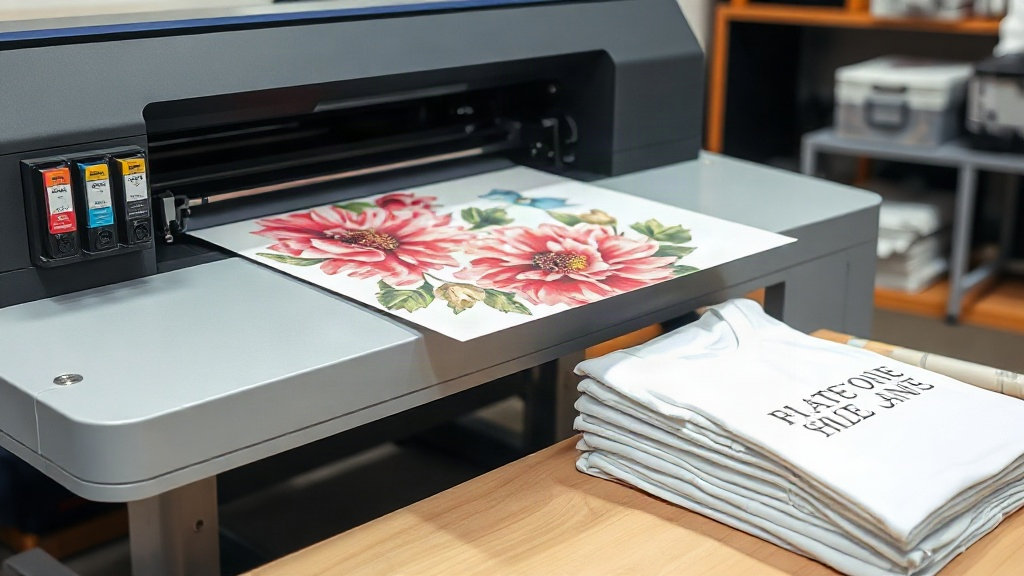
Imagine holding a t-shirt with a design so vivid it looks like it was painted on, yet you only ordered one. That's the magic of DTF printing on demand. Unlike traditional screen printing, which demands bulk orders and hefty setup fees, DTF (Direct to Film) technology lets you print full-color, durable designs on demand, one piece at a time. Whether you're a small business owner, a hobbyist, or an artist exploring print on demand, DTF opens a world of possibilities without the risk of unsold inventory.
What Exactly Is DTF Printing?
DTF stands for Direct to Film. It's a printing method where your design is printed onto a special film, coated with a powder adhesive, and then heat-pressed onto fabric. The result is a soft, stretchable print that bonds permanently to the material. Unlike DTG (Direct to Garment), which prints directly onto the fabric, DTF uses a transfer film, allowing it to work on a wider range of fabrics, including cotton, polyester, blends, and even nylon. This versatility makes DTF a favorite for on-demand production.
How DTF Works Step by Step
- Design Preparation: Create your artwork in a graphics program, ensuring it's mirrored and sized correctly.
- Printing: A DTF printer prints the design onto a PET film using specialized inks.
- Powdering: While the ink is wet, a hot-melt adhesive powder is applied evenly over the design.
- Curing: The film passes through a heat source to melt the powder, creating a dry, tack-free surface.
- Transfer: The film is placed on the garment and heat-pressed. After cooling, the film is peeled away, leaving the design bonded to the fabric.
This process can be done in-house with a DTF printer and heat press, or outsourced to a DTF printing service that handles the printing and shipping of transfers or finished garments.
Why Choose DTF for Print on Demand?
Print on demand (POD) is all about efficiency: you only produce what you sell. DTF aligns perfectly with this model because it eliminates minimum order quantities and allows for high-detail, multi-color designs without extra cost. Here's why DTF stands out:
- No Minimums: Print one or one hundred; the cost per unit remains consistent.
- Unlimited Colors: Unlike screen printing, DTF doesn't charge per color, so you can use gradients, photographs, and complex artwork freely.
- Fabric Flexibility: Works on cotton, polyester, blends, leather, and more. Perfect for diverse product offerings.
- Durability: DTF prints resist cracking, peeling, and fading, even after multiple washes.
- Speed: Once set up, the process is fast, enabling quick turnaround for customer orders.
For a POD business, these advantages translate to lower risk, higher creativity, and happier customers.
DTF vs. Other Printing Methods
Understanding how DTF compares to other common printing techniques helps you choose the right method for your needs.
DTF vs. DTG
DTG (Direct to Garment) prints directly onto the fabric, which can be limiting for dark colors and polyester. DTF, with its transfer film, adheres well to dark and light fabrics alike and doesn't require pre-treatment. DTF also tends to be more durable on polyester.
DTF vs. Screen Printing
Screen printing is cost-effective for large orders but requires separate screens per color, making small runs expensive. DTF has no setup fees and handles complex designs effortlessly, making it ideal for on-demand and small batches.
DTF vs. Vinyl
Heat transfer vinyl (HTV) is great for simple, single-color designs but struggles with intricate details and gradients. DTF excels at photographic and multi-color images, offering a softer feel and greater durability.
Getting Started with DTF Printing on Demand
Ready to dive in? Here's a roadmap to launch your DTF printing operations.
1. Choose Your Path: In-House vs. Outsourced
If you're just starting, outsourcing to a DTF printing service (like Printful, Printify, or a local provider) is a low-risk way to test the waters. You upload your design, they print and ship directly to your customer. As your volume grows, you might invest in a DTF printer (e.g., Epson F2100 or a converted printer) and a heat press to bring production in-house, reducing costs and turnaround time.
2. Design for DTF Success
Not all designs are created equal. For best results, use high-resolution images (300 DPI), avoid very thin lines (they may not adhere well), and consider the fabric color. DTF prints are opaque, so they show up well on dark garments, but a white underbase is automatically included, so no need to worry about color bleed.
3. Master the Heat Press
The heat press settings are critical: typically 325°F (160°C) for 10-15 seconds with medium pressure. Always test with a scrap garment to find the sweet spot for your equipment. After pressing, let the transfer cool completely before peeling (cold peel) for a matte finish, or peel hot for a glossy look.
4. Market Your Custom Apparel
With DTF, you can offer unique products: all-over prints, personalized gifts, small-batch collections. Use social media to showcase your designs, and emphasize the no-minimum, made-to-order aspect to attract environmentally conscious buyers.
Cost Breakdown: Is DTF Worth It?
DTF printing costs depend on whether you outsource or do it yourself. Outsourced transfers typically cost $2-$5 per A4 sheet, plus garment and shipping. In-house, after initial equipment investment ($3,000-$10,000 for a printer and press), the cost per print can drop to under $1 for supplies. For POD, the key is balancing quality, speed, and price. DTF offers a compelling middle ground: higher quality than vinyl, lower setup than screen printing, and broader fabric compatibility than DTG.
Common Challenges and How to Overcome Them
DTF isn't without its quirks. Here are a few issues you might encounter and how to fix them:
- Ink Cracking: Usually caused by insufficient powder or uneven curing. Ensure even powder application and proper curing temperature.
- Poor Adhesion: May result from too little pressure or incorrect temperature. Adjust your heat press settings.
- Color Fading: Use high-quality inks and follow washing instructions (inside out, cold water).
- Film Sticking: Allow the transfer to cool before peeling if you experience sticking.
With practice, you'll troubleshoot these quickly and maintain consistent quality.
Future of DTF in Print on Demand
As POD continues to grow, DTF is poised to become a dominant method. Innovations in eco-friendly inks and faster printers are making it more accessible. For entrepreneurs, DTF offers a way to compete with big brands by delivering custom, high-quality apparel without inventory overhead. Whether you're adding DTF to your existing POD offerings or starting fresh, the technology empowers you to say yes to every order, big or small.
Frequently Asked Questions
What fabrics can I use with DTF printing?
DTF works on a wide range of fabrics, including cotton, polyester, cotton-poly blends, nylon, leather, and even treated wood. It's particularly effective on dark and synthetic materials where other methods struggle.
How durable is a DTF print?
When applied correctly, DTF prints are highly durable. They resist cracking, peeling, and fading for 50+ washes if cared for properly (wash inside out in cold water, avoid bleach, tumble dry low).
Can I do DTF printing at home?
Yes, with a DTF printer (or a converted inkjet printer), DTF ink, PET film, adhesive powder, and a heat press, you can set up a home-based DTF workshop. It requires an initial investment and some practice, but it's feasible for small-scale production.
Is DTF printing cost-effective for small orders?
Absolutely. DTF has no minimum order quantity and no per-color fees, making it ideal for one-off items or small batches. The cost per print remains relatively stable whether you print one or fifty.
How does DTF compare to screen printing for large orders?
For very large orders (500+ pieces) with simple designs, screen printing may be more economical due to lower ink costs. However, DTF is more versatile for complex, multi-color designs and requires no setup, making it competitive for small to medium runs.