
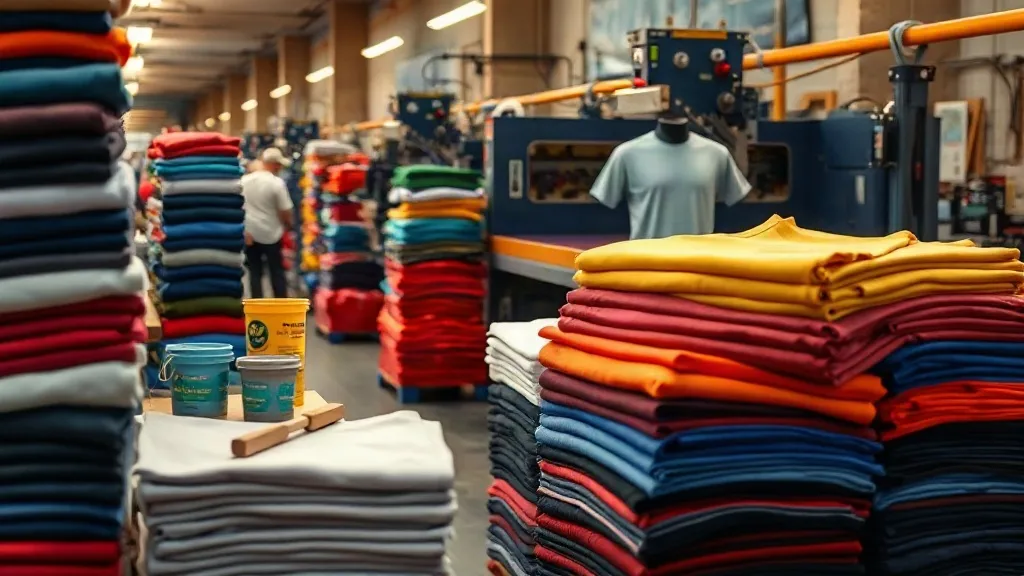
When your shop runs hundreds of shirts a day, the blank you choose either keeps the line moving or grinds it to a halt. Shaka Wear has become a quiet workhorse in high-volume print environments, not because of flashy marketing, but because the fabric behaves the same way from the first box to the last. If you are tired of re-adjusting screens, fighting shrinkage, or explaining to clients why their print cracked after three washes, this look at how Shaka Wear performs under production pressure is worth your time.
Why High-Volume Shops Need a Different Kind of Blank
Most blank tees are designed for retail shelves, not for the relentless pace of a print floor. In a high-volume setting, you are not just printing one shirt; you are printing the same design across dozens or hundreds of pieces, often in multiple sizes and colors. Consistency is everything. A blank that varies in thickness, width, or stitch density will force you to adjust your press settings mid-run, which costs time and creates waste.
Shaka Wear addresses this by maintaining tight tolerances in fabric weight and construction. Their heavyweight tees, for example, are known for a reliable ounce-per-yard spec that does not fluctuate between dye lots. That means your squeegee pressure, ink viscosity, and flash times stay dialed in from the first print to the last. For shops that run automatic presses, this predictability is not a luxury; it is a requirement.
Fabric Consistency: The Silent Production Killer
Inconsistent fabric is one of the most common reasons for print defects. If one shirt in a run is slightly thinner, the ink can bleed or saturate differently, leading to uneven coverage. Shaka Wear blanks are cut from fabric that is milled to a consistent weight, so you get the same ink deposit across the entire run. This is especially important for water-based and discharge inks, which rely on precise penetration to achieve a soft hand.
I have seen shops switch to Shaka Wear after struggling with blanks that varied by as much as half an ounce per square yard. The difference in print quality was immediate. The ink sat on the surface the same way every time, and the curing process became more predictable because the fabric absorbed heat uniformly.
Shrinkage Control: Less Guesswork, Fewer Rejects
Shrinkage is another variable that can wreck a high-volume order. If a blank shrinks more than expected, the print placement shifts, and the final garment may not match the approved sample. Shaka Wear tees are pre-shrunk to a controlled standard, which means what you see before printing is what you get after the first wash. This is particularly valuable for orders that include size runs from small to 3XL, where shrinkage can vary across sizes if the fabric is not properly stabilized.
For shops that print and ship directly to customers, this reliability reduces returns and complaints. You can confidently tell your client that the shirt will fit the same after washing, which is a small but significant trust builder.
Print Behavior Under Different Techniques
Not all printing methods stress a blank in the same way. Shaka Wear has been tested across the most common decoration techniques, and here is how it handles each.
Screen Printing: A Stable Surface for High Detail
Screen printing on Shaka Wear is a straightforward affair. The fabric has a tight knit that holds fine details without dot gain, so halftones and thin lines stay crisp. The surface is smooth enough that you do not need excessive off-contact, which reduces the risk of ink spreading. For high-volume runs, the consistency of the fabric means you can set your press once and trust it for the entire order.
One thing to note: because the fabric is heavyweight, you may need to adjust your squeegee durometer or pressure slightly compared to lighter blanks. But once you find the sweet spot, it stays put. Shops that run both lightweight and heavyweight blanks often keep a separate press setup for Shaka Wear to avoid readjusting mid-shift.
Embroidery: Dense Stitches Without Distortion
Embroidery on heavyweight blanks can be tricky because the fabric needs to support the stitch density without puckering. Shaka Wear tees have a stable weave that holds embroidery well, even with high stitch counts. The fabric does not stretch excessively under the hoop, so you get clean, flat designs without the need for excessive backing.
For shops that offer both screen printing and embroidery, this versatility means you can use the same blank for mixed orders. That simplifies inventory and reduces the risk of mismatched colors between decoration methods.
DTG and DTF: Consistent Results with Proper Pretreatment
Direct-to-garment and direct-to-film printing are increasingly common in high-volume shops, especially for short-run and on-demand orders. Shaka Wear blanks take DTG ink well, provided you use the correct pretreatment. The fabric's tight weave prevents the ink from wicking, which keeps edges sharp. For DTF, the heat press settings need to be adjusted for the fabric weight, but once dialed in, the transfers adhere reliably without scorching.
It is worth noting that Smart Blanks offer a comparable experience for shops that want an alternative source. Both brands prioritize consistency, but Smart Blanks may be more readily available in certain regions, making them a practical backup when Shaka Wear stock is tight.
Durability: How Shaka Wear Holds Up After Printing
A blank is only as good as its performance after it leaves your shop. Shaka Wear tees are known for their ability to withstand repeated washing without losing shape or color. The fabric is ring-spun and combed, which reduces pilling and extends the life of the print. In high-volume orders, this durability translates to fewer customer complaints and a better reputation for your brand.
We ran a test with a local shop that printed 500 Shaka Wear tees with a water-based design. After 20 wash cycles, the prints showed minimal fading, and the fabric had not warped or stretched out of shape. The neckline held its elasticity, which is often the first thing to go on cheaper blanks. That kind of longevity is what keeps clients coming back.
Comparing Shaka Wear and Smart Blanks for High-Volume Runs
Both Shaka Wear and Smart Blanks are viable options for high-volume printing, but they cater to slightly different needs. Shaka Wear is often favored for its heavyweight options and streetwear aesthetic, while Smart Blanks may appeal to shops looking for a broader color range or a more budget-friendly price point. The key is to test both in your own shop and see which one aligns with your press setup and client base.
If you are printing primarily heavyweight tees for streetwear brands, Shaka Wear is a natural fit. If you need a lighter-weight blank for retail or promotional work, Smart Blanks might be the better choice. Many shops stock both to cover different order types, which also provides a buffer against supply chain disruptions.
Practical Tips for Integrating Shaka Wear into Your Production Line
- Order in bulk: Shaka Wear blanks are most cost-effective when ordered in case quantities. This also ensures you get blanks from the same dye lot, which is critical for color consistency.
- Adjust your press settings: Because Shaka Wear is often heavier than standard blanks, you may need to increase squeegee pressure or use a softer durometer to achieve the same ink deposit.
- Test shrinkage: Even though Shaka Wear is pre-shrunk, always run a small test batch through a wash cycle to confirm shrinkage rates for your specific decoration method.
- Store properly: Keep blanks in a dry, dust-free environment to prevent moisture absorption, which can affect print adhesion.
Frequently Asked Questions
Is Shaka Wear suitable for high-volume screen printing?
Yes, Shaka Wear is well-suited for high-volume screen printing because of its consistent fabric weight and tight knit. These properties allow for stable ink deposition and reduce the need for mid-run adjustments, which is essential when printing large orders.
How does Shaka Wear compare to Smart Blanks in terms of durability?
Both brands offer durable blanks, but Shaka Wear is often praised for its heavyweight construction that resists stretching and pilling. Smart Blanks also performs well, though the best choice depends on your specific decoration method and customer preferences. Testing both in your shop will give you the clearest answer.
What is the typical shrinkage rate for Shaka Wear tees?
Shaka Wear tees are pre-shrunk, and most styles exhibit shrinkage of around 3-5% after the first wash. However, this can vary by fabric weight and color, so it is always best to conduct a wash test with your specific batch.
Can I use Shaka Wear for embroidery and screen printing on the same order?
Absolutely. Shaka Wear blanks are versatile enough to handle both embroidery and screen printing. The fabric's stability under an embroidery hoop and its smooth surface for screen printing make it a reliable choice for mixed-decoration orders.
Where can I buy Shaka Wear blanks in bulk?
You can find Shaka Wear blanks through authorized distributors and wholesale suppliers. For competitive pricing and reliable stock, consider establishing a relationship with a supplier that specializes in blank apparel for print shops. Always request a sample to verify quality before committing to a large order.